Despair
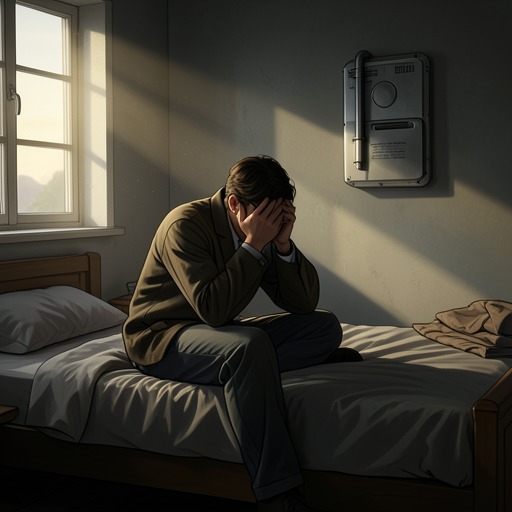
The Myth of SisyphusDespair is a central condition in the book’s account of the absurd, but it is never treated as a single, unqualified emotion. It can name the refusal of consoling illusions, the metaphysical anxiety produced by the clash between the human mind and an indifferent world, or the sorrow that accompanies consciousness of an unalterable fate. Against each form of evasion, the absurd demands lucidity: despair may be acknowledged, but it must not become resignation, dogma, or a disguised return to hope.
Despair and the Absurd Condition
The absurd is defined as an unceasing confrontation between the human mind and the world, and that confrontation cannot be preserved if one of its terms is removed. Its logic therefore requires a total absence of hope, a continual rejection, and a conscious dissatisfaction. These terms are carefully separated from despair, renunciation, and immature unrest. The absence of hope does not mean that the absurd person passively collapses; it means that the person refuses to smuggle a future reconciliation into a condition whose defining fact is unresolved conflict. Consent would overthrow the divorce between mind and world, destroying the absurd itself.
This distinction makes despair a condition of intellectual honesty rather than a final verdict on life. The absurd person seeks what is true rather than what is desirable. When Kierkegaard’s question about what life would be without eternal consciousness threatens to turn anxiety into an argument for faith, the absurd mind refuses to feed on the roses of illusion. It accepts the answer of despair because that answer is preferable to a falsehood adopted for comfort. Such acceptance remains active and determined: the soul does not solve the contradiction, but neither does it pretend that the contradiction has vanished.
Faith, Hope, and Philosophical Escape
The book opposes this lucid despair to the leap by which existential thought negates the very reason that first recognizes the absurd. In the phrase “the absurd is sin without God,” despair is separated from religious alienation: it is the metaphysical state of a conscious person who knows the tension between mind and world but does not convert that tension into a path toward God. The issue is not a judgment against religious believers so much as a description of a movement in which thought abandons its own evidence in order to reach an eternal resolution.
This movement is called philosophical suicide because a thought negates itself and transcends itself through that negation. Its forms may differ, and the object of the leap may be religious or rational, but the essential gesture remains the same. The absurd person will not exchange an anxious truth for a desirable certainty. Despair therefore functions as the point at which evasion is blocked: it is what remains when the demand for explanation is maintained without inventing an answer.
The same conflict appears in the discussion of Fyodor Dostoevsky. His novels establish a world of logic pushed toward death, dreadful freedom, and judgments such as “All is well, everything is permitted, and nothing is hateful.” Yet the later appeal to immortality reverses the absurd movement. The claim that the human need for immortality proves the soul’s immortality, followed by Alyosha Karamazov’s assurance that the dead will meet again, restores the hope that the absurd argument had placed in question. Kirilov, Stavrogin, and Ivan are consequently defeated within the book’s interpretation: their confrontation with God ends not in sustained absurd lucidity but in metaphysical consolation.
Franz Kafka presents a related but more complicated case. The more tragic The Trial becomes, the more forceful the hope in The Castle appears. The latter’s passionate leap toward divine grace is moving precisely because it is illegitimate from the standpoint of the absurd. Hope can thus emerge from an absurd work and betray its original discipline: a lucid repetition of a sterile condition may become a cradle of illusions, give shape to hope, and assign meaning to the author’s life. Despair and hope are therefore not simple opposites. The decisive question is whether hope preserves the contradiction or escapes it by promising a final realm beyond earthly limits.
Sisyphus: Consciousness Against Suffering
The figure of Sisyphus gives despair a physical and dramatic form. After the stone has reached the summit and rushed back toward the lower world, Sisyphus descends toward the torment that will begin again. This pause is the crucial interval because it is the hour of consciousness. He knows that the punishment has no end, and that knowledge makes him superior to his fate: he is stronger than his rock. His despair is not ignorance of suffering but complete awareness of its extent.
The tragedy of Sisyphus depends on consciousness. If hope of success sustained him at every step, his labor would lose its specifically tragic force. His condition resembles that of the modern workman, who repeats the same tasks throughout life, but it becomes tragic when its meaning is recognized. Sisyphus is a powerless and rebellious “proletarian of the gods,” yet his lucidity, which appears to be the source of his torture, also crowns his victory. No fate is beyond being surmounted by scorn, because scorn alters the relation between the sufferer and the power that condemns him without changing the external punishment.
The descent can be sorrowful, especially when memories of earthly happiness cling too tightly or when the call of happiness becomes insistent. Melancholy then appears as the victory of the rock itself, and the weight of grief resembles the nights of Gethsemane. But crushing truths can lose their power when they are fully acknowledged. The movement from unconscious submission to conscious recognition is illustrated by Oedipus: at first he obeys fate without knowing it; once he understands, his tragedy begins, but so does his possibility of victory. Even blind and desperate, he discovers that the cool hand of a girl is the only bond linking him to the world, and he concludes that all is well.
Sisyphus’s possible joy does not cancel his despair. Happiness and the absurd are described as two children of the same earth, inseparable though neither mechanically produces the other. The point is not that suffering secretly guarantees happiness, but that consciousness can prevent suffering from becoming a total explanation of existence. By making fate a human matter to be settled among human beings, the absurd hero strips it of divine authority while leaving its pressure intact.
Tragedy, Beauty, and Limits
The book extends the problem of despair beyond individual consciousness into a contrast between Greek tragedy and modern Europe. The Mediterranean sun gives tragedy a different character from the tragedy of fogs: Greek despair appears through beauty and its suffocating intensity, within a world that balances shadow with light. Greek thought takes refuge in limits and does not carry either the sacred or reason to absolute extremes. Modern Europe, by contrast, feeds despair on ugliness and convulsion while pursuing totality and negating whatever it does not glorify.
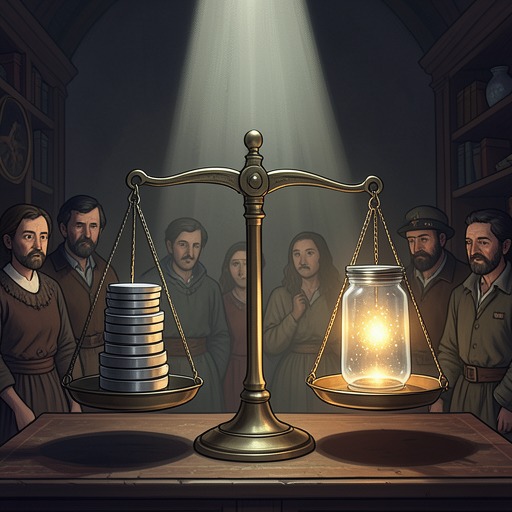
For the Greeks, equity implies a limit; modern justice seeks to become total. Their conception of measure therefore exposes the danger of political and philosophical absolutes. The image of the sun that must not overstep its measures becomes a principle of cosmic restraint: whoever exceeds the limit is eventually struck down. Modern history may laugh at such a threat, yet the boundaries remain. Even amid its wildest aberrations, humanity continues to dream of the equilibrium it has abandoned.
The loss of limits intensifies collective despair. Christianity had substituted the tragedy of the soul for contemplation of the world while preserving a spiritual nature, but with God dead there remains history and power. Modern philosophy places values at the end of action rather than before it; because values are still becoming, no brake restrains competing struggles. Messianisms confront one another, empires clash, and Europe moves from philosophical violence toward literal cannon fire. Against this historical conflagration, nature remains with calm skies and its own reasons, even as the threat appears that the atom may catch fire and history may end in the triumph of reason and the agony of the species.
Yet despair is not the only result of recognizing catastrophe. The artist, unlike the historical spirit, knows the limits imposed by the obligation of artistic creation, and that knowledge gives the artistic passion a relation to freedom rather than tyranny. Beauty cannot be defended as an escape from human suffering, but neither can humanity survive by exiling it. The era’s desire to attain the absolute before understanding the world is itself a form of desertion. Against it stands Ulysses, who chooses the land of his fathers, and death with it, rather than immortality. That choice embodies a pride faithful to human limits: it does not promise deliverance, but it refuses to trade the finite world for an ungrounded hope.